



Not all lithium-ion batteries are suitable for cold storage applications. Warehouse temperature, charging temperature, discharge performance, battery heaters, the Battery Management System (BMS), and the charger must all be considered together to determine the right battery configuration for an electric forklift operating in cold storage.
This article will help businesses understand how to choose the right lithium battery for electric forklifts in cold storage environments to achieve reliable performance and optimal operating efficiency.
What Problems Does Cold Storage Create for Electric Forklift Lithium Batteries?
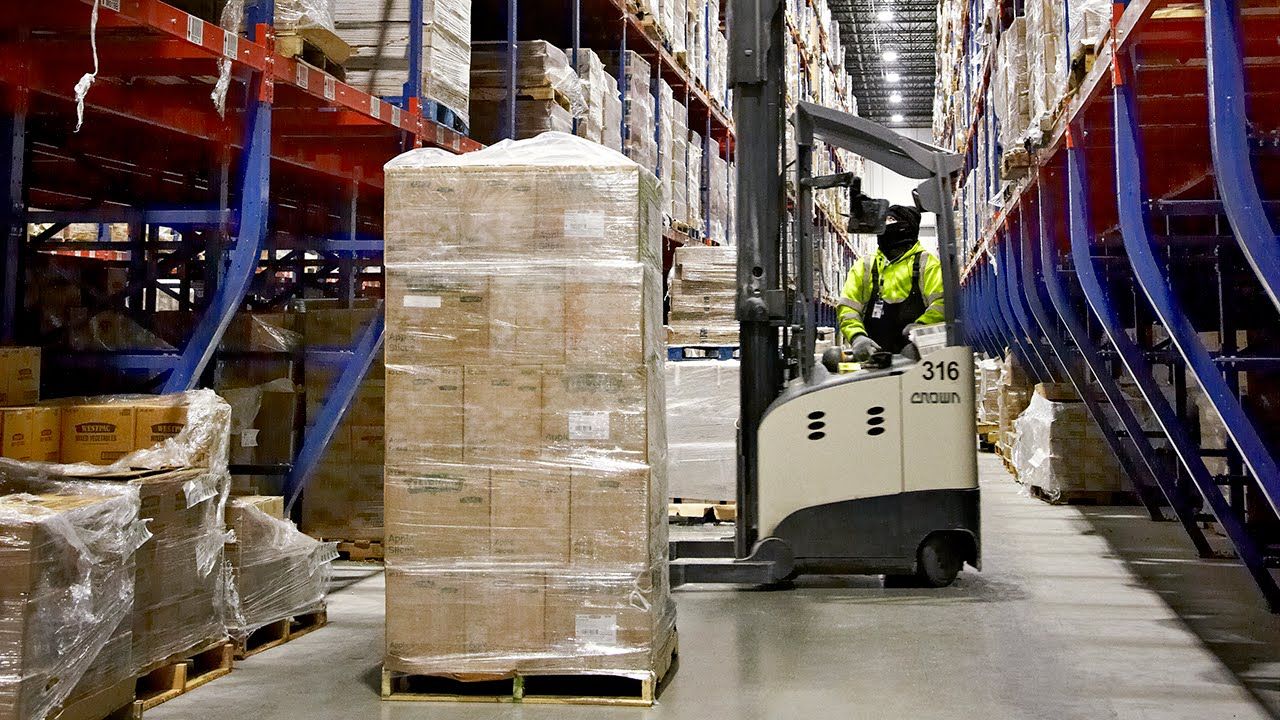
Low temperatures affect the charging and discharging performance of batteries. As a result, electric forklifts equipped with batteries that are not designed for cold storage may experience reduced performance, shorter operating times, and additional charging downtime.
This is a common challenge for businesses operating cold storage facilities, whether they use traditional lead-acid batteries or standard lithium-ion batteries that are not specifically designed for low-temperature applications.
Lead-Acid Batteries Become Less Efficient at Low Temperatures
When temperatures drop significantly, electrochemical reactions and ion transportation inside lead-acid batteries slow down, leading to several problems:
- Reduced forklift performance in cold storage, including weaker lifting power and slower travel speed.
- Shorter actual operating time per charge.
- More frequent battery replacement or charging, disrupting warehouse operations.
- Direct impacts on productivity, especially in facilities operating continuously.
For warehouses running multiple shifts, reduced battery performance and more frequent charging or battery swapping can significantly affect overall productivity. This is one of the main reasons why more businesses are considering lithium batteries as an alternative to traditional lead-acid batteries.
However, an important question remains: Can standard lithium-ion batteries solve the challenges of cold storage operations, or do businesses need specially designed lithium batteries for cold storage electric forklifts?
Condensation Issues with Standard Lithium Batteries
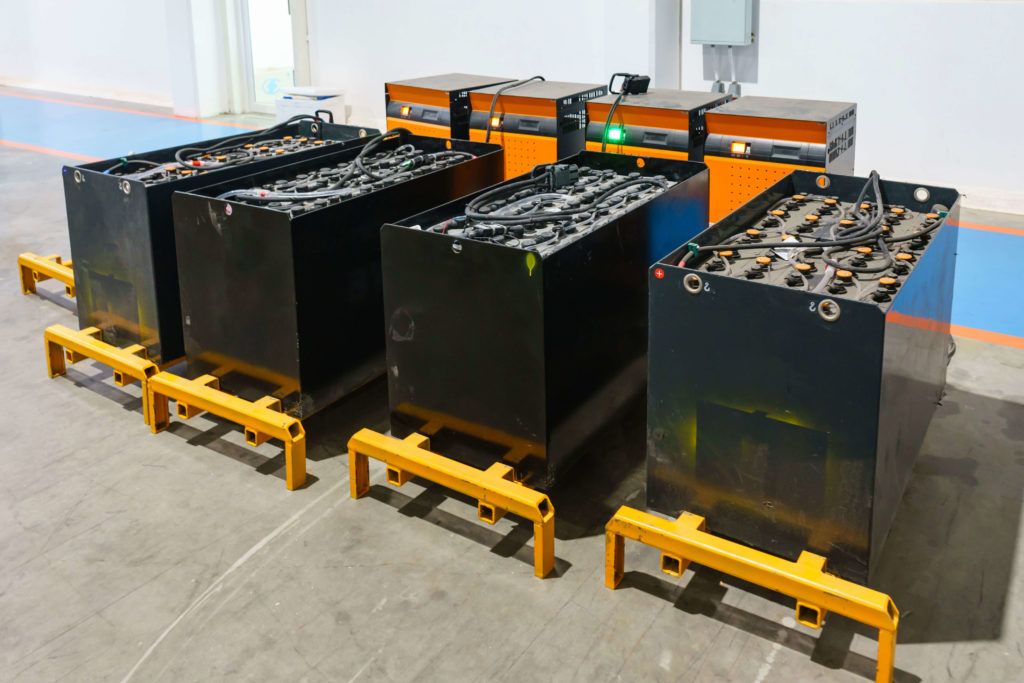
When an electric forklift lithium battery operates in a low-temperature environment and is then moved to an area with higher temperatures and humidity (typically for charging or when traveling between different storage areas), moisture in the air can condense on the battery components.
Prolonged condensation can cause serious problems, including corrosion of electronic components, oxidation of battery terminals and connectors, reduced insulation resistance, localized short circuits, BMS damage, battery cell failure, and a shorter overall battery system lifespan.
Therefore, not every lithium-ion battery designed for electric forklifts is suitable for cold storage operations. This is why many industrial battery suppliers recommend using specialized cold storage lithium batteries instead of standard battery models.
Cold storage lithium batteries are equipped with integrated heating systems to help maintain suitable battery temperatures during operation and charging, reducing temperature differences that may lead to condensation.

How to Choose the Right Lithium Battery for Electric Forklifts in Cold Storage
First, businesses need to understand two important specifications: the operating temperature and the charging temperature of electric forklift lithium batteries.
- Lithium battery operating temperature: Cold storage forklift batteries should be capable of operating at temperatures as low as -25°C and below 5°C, depending on the battery specification and application requirements.
- Lithium battery charging temperature: The permitted charging temperature is generally higher than the operating temperature. Charging at sub-zero temperatures should be avoided unless the battery is specifically designed to support it. The recommended charging temperature is typically between 10°C and 40°C.
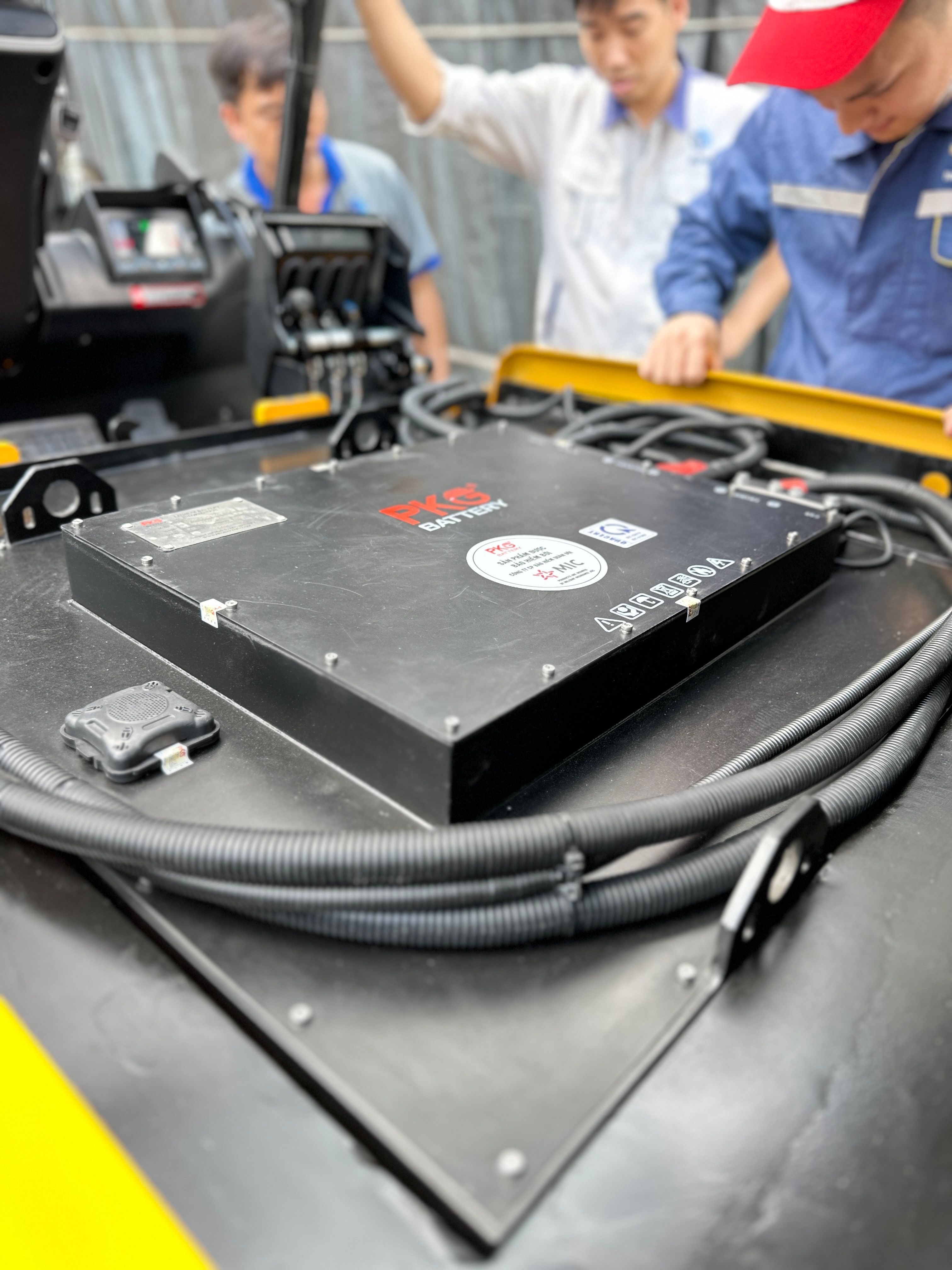
There are four essential factors to consider when selecting lithium batteries for electric forklifts in cold storage environments.
Electric Forklift Operating Environment in Cold Storage
| Evaluation Criteria | Operating Conditions |
|---|---|
| Chilled Storage | 5°C to 15°C |
| Cold Storage | -25°C to below 5°C |
| Operating Environment | Whether the forklift frequently moves between cold and warm environments |
| Temperature Difference | Whether the temperature difference between the operating area and charging area is greater or less than 10°C |
| Condensation Risk | Whether the environment is likely to cause moisture condensation |
Standard lithium-ion batteries may be used in electric forklifts under the following conditions:
- The chilled warehouse operates at temperatures of 5°C or above.
- No condensation occurs during operation.
- The temperature difference between the operating area and charging area does not exceed 10°C. If moving between different temperature environments is unavoidable, a temperature-controlled transition area should be provided to allow the battery to gradually adapt, rather than moving it suddenly between environments with significant temperature differences.
Specialized cold storage lithium batteries are recommended under the following conditions:
- Chilled storage environments with temperatures ranging from 5°C to 15°C.
- Cold storage environments with temperatures from -25°C to below 5°C.
- Forklifts frequently moving between cold and warm environments for charging or transportation between warehouses.
- Environments with a high risk of moisture condensation.
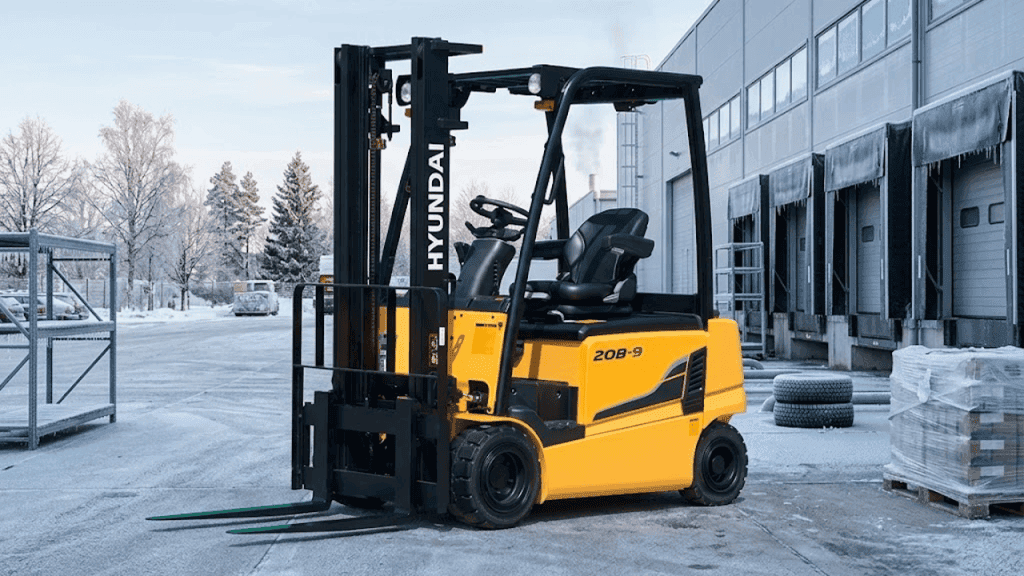
Integrated Battery Heater and Thermal Management System
An integrated battery heating system (Heater) helps maintain battery cell temperatures within the permitted operating range during extremely cold conditions and before charging.
This is particularly important for deep-freeze storage facilities. Without an integrated heater, lithium batteries may not reach the temperature required for safe charging.
When researching battery products, businesses should ask their forklift supplier for detailed information about the heating system and its operating conditions to ensure the selected battery meets their actual requirements.
Most specialized lithium batteries for cold storage electric forklifts are equipped with this heating system.
Battery Management System (BMS)
The Battery Management System (BMS) plays a critical role in ensuring the safety and reliable operation of lithium battery packs used in cold storage electric forklifts.
Its main functions include:
- Real-time battery temperature monitoring.
- Individual battery cell voltage monitoring.
- Charging and discharging current monitoring.
- Overall battery condition monitoring.
- Battery protection against abnormal operating conditions, including overtemperature, overvoltage, and overcurrent.
- Data communication between the forklift and battery charger.
A well-designed Battery Management System for cold storage applications should feature suitable warning thresholds and protection settings to accommodate the specific operating conditions of low-temperature environments.
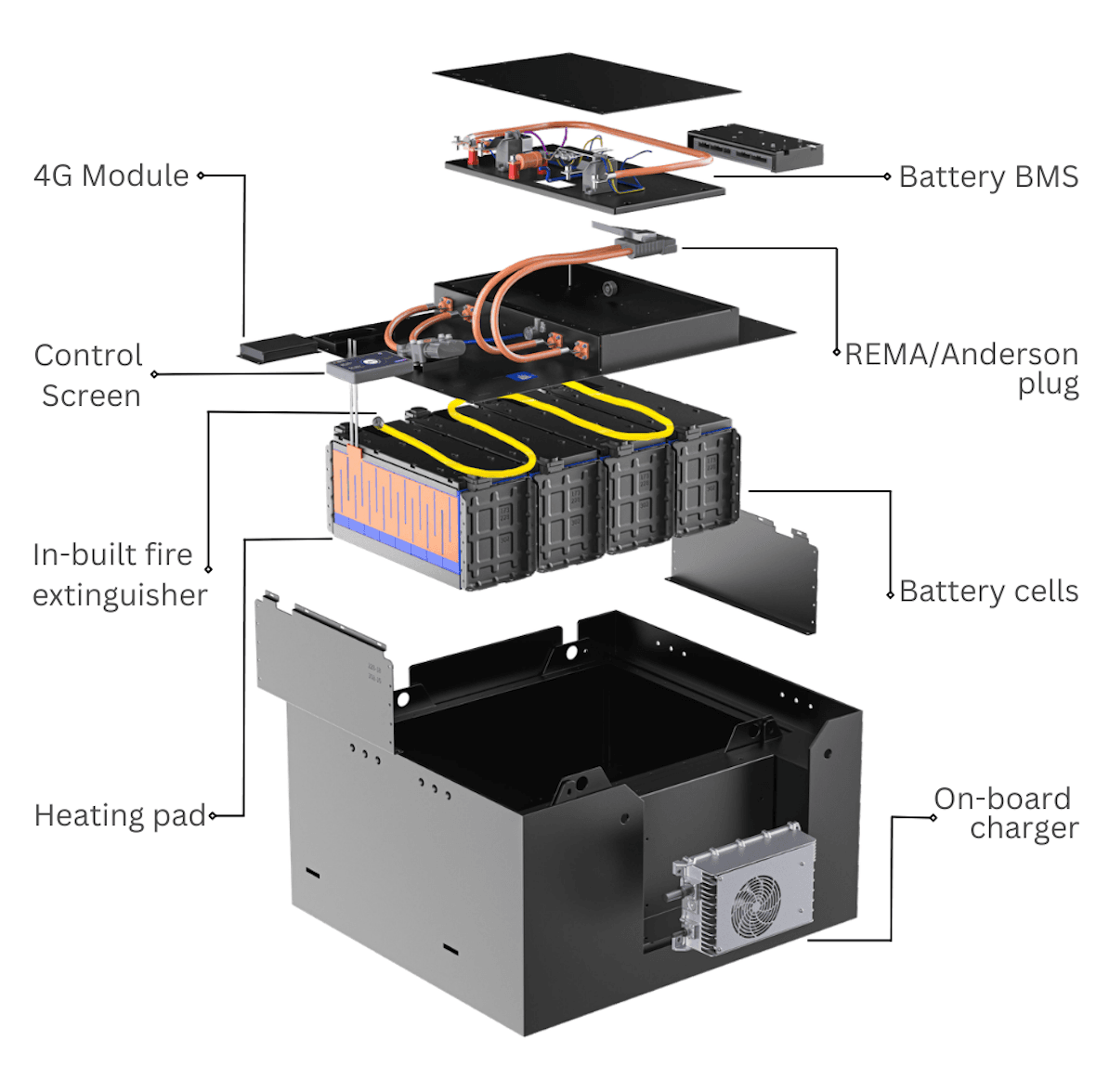
Is the Battery Charger Compatible with Lithium Batteries and Cold Storage Environments?
Normally, the battery charger is supplied together with the electric forklift battery when purchasing a new forklift.
However, if a business intends to reuse a charger from another lithium battery, several important factors must be considered:
- Is the charger's output voltage compatible with the battery?
- Is the charging current suitable for the battery manufacturer's recommendations?
- Is the charger installed in an area with a positive temperature? The temperature difference between the charging area and the operating environment should generally not exceed 10°C.
Further reading: Everything You Need to Know About Forklift Battery Chargers
What Should You Do If You Are Already Using Standard Lithium Batteries in Cold Storage?
Many businesses only discover these issues after standard lithium batteries have already been operating in cold storage for some time.
Depending on the actual operating conditions, there are three possible solutions:
Option 1: Continue Using the Existing Battery
This option is suitable when the operating environment maintains a temperature of 5°C or above and no condensation has occurred.
In this case, businesses should actively control the temperature difference between the operating area and charging area to keep it within 10°C. Regular battery inspections should also be carried out according to the manufacturer's recommendations.
Option 2: Upgrade the Lithium Battery's Condensation Protection System
This option is recommended for chilled storage facilities operating at 5°C–15°C, cold storage areas below 5°C, and applications where forklifts frequently move between warm and cold environments, increasing the risk of condensation.
In these cases, NLP168, a supplier of lithium batteries and electric forklifts for cold storage applications, can conduct an on-site assessment and implement the necessary technical solutions, such as moisture protection measures, electrical system upgrades, and battery temperature control.
Option 3: Switch to Specialized Cold Storage Lithium Batteries
This option is recommended for warehouses operating at temperatures ranging from -25°C to 15°C, especially when forklifts frequently move between different temperature environments with a high risk of condensation.
Businesses should regularly inspect the lithium battery systems currently operating in their cold storage facilities.

How to Properly Operate and Maintain Lithium Batteries in Cold Storage Electric Forklifts
Choosing the right battery is only the first step. Proper operation and maintenance are equally important in determining its actual service life.
Safety Guidelines for Daily Charging and Operation
Based on common recommendations from lithium battery manufacturers for standard battery models, there are several important precautions when operating electric forklifts in chilled and cold storage environments.
The following practices should be avoided:
- Moving a forklift directly from a chilled or cold storage environment into a high-temperature area.
- Moving a forklift directly from a cold environment into hot outdoor conditions or direct sunlight.
- Charging batteries in an area where the temperature differs significantly from the operating environment.
- Storing batteries in environments where dew or moisture condensation occurs.
Regular Inspection and Operating Condition Monitoring
To ensure the safety and service life of lithium batteries used in cold storage electric forklifts, operators should regularly check the following two groups of conditions:
- Environmental Conditions: Ensure stable ambient temperatures and maintain the charging area within the permitted temperature range, ideally between 10°C and 40°C.
- Battery System Condition: Check for condensation on the battery surface, water accumulation or oxidation on battery terminals and connectors, other abnormal signs of corrosion, and any warnings generated by the BMS.
If any abnormal signs are detected, stop using the battery immediately and contact the electric forklift supplier or lithium battery manufacturer for further instructions.
How to Store Lithium Batteries When Not in Use
When batteries are not used for an extended period, businesses should:
- Avoid storing batteries in a fully discharged or continuously 100% charged state.
- Keep batteries in a dry area with stable temperatures.
- Regularly check the battery's state of charge and monitor any warnings from the Battery Management System.
How to Optimize Long-Term Costs When Investing in Cold Storage Lithium Batteries for Electric Forklifts
Comparing only the initial purchase price of specialized cold storage lithium batteries with traditional lead-acid batteries or standard lithium batteries can lead to misleading conclusions.
A proper Total Cost of Ownership (TCO) assessment should consider multiple cost factors, including the purchase price, maintenance expenses, production downtime, electricity consumption, and equipment wear.
| Comparison Criteria | Lead-Acid Batteries in Cold Storage | Standard Lithium Batteries in Cold Storage | Specialized Cold Storage Lithium Batteries |
|---|---|---|---|
| Initial Purchase Price | Low: Approximately VND 50–90 million, depending on capacity. | Medium: VND 100–180 million. | Highest: VND 100–300 million, including an integrated heating system. |
| Service Life | Approximately 1,000–1,500 charging cycles (around 3–4 years). | More than 4,000 charging cycles (around 6–10 years). | More than 4,000 charging cycles (around 6–10 years). |
| Cold Storage Operating Risks | Reduced service life due to condensation and potential acid leakage. | Risks of fire, explosion, and moisture condensation. | Designed with anti-condensation protection and an integrated heating system for safer operation. |
| Charging Time | 8–10 hours. | 1–2 hours. | 1–2 hours. |
Further reading: Lithium vs. Lead-Acid Forklift Batteries: Which Is the Best Solution for the Future of Material Handling?
How to Choose a Reliable Supplier of Cold Storage Lithium Batteries for Electric Forklifts
Is your business planning to invest in or upgrade lithium batteries for a forklift fleet operating in cold storage facilities, but still unsure which solution is right for your needs?
NLP168 is ready to support your business in selecting the right battery configuration based on actual operating conditions.
Further reading: Electric Forklift Models Distributed by NLP168
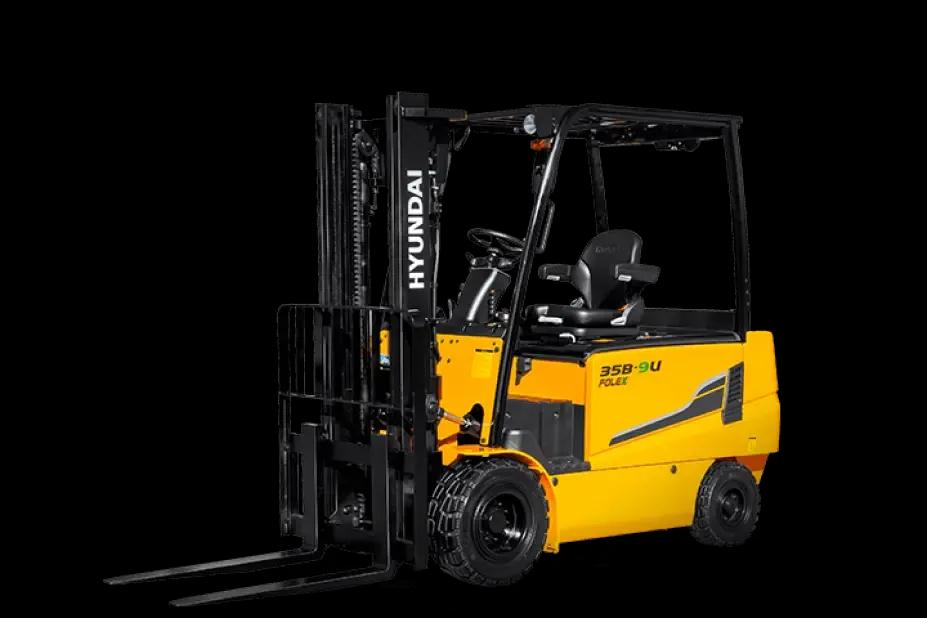
Hyundai 2.5-Ton Electric Forklift Model 25BE-X Equipped with a Lithium Battery
Simply provide us with your current forklift model, warehouse operating temperature, and number of operating shifts per day. NLP168's technical team will help determine the most suitable lithium battery configuration for your business requirements.
Hotline: 093 208 1688
FAQ About Lithium Batteries for Cold Storage Electric Forklifts
What Is the Maximum Recommended Temperature Difference Between the Charging Area and the Operating Area?
For many standard lithium battery models, the recommended temperature difference should generally not exceed 10°C, according to PKG Battery's published guidance.
If operations require forklifts to move between environments with temperature differences greater than this recommended limit, businesses should consider providing a temperature-controlled transition area or switching to specialized cold storage lithium batteries.
Do Lithium Batteries for Cold Storage Electric Forklifts Need an Integrated Heater?
For deep-freeze storage applications, an integrated battery heater is often an important feature. It helps maintain battery cell temperatures within the permitted range, particularly before and during charging.
Specialized lithium batteries designed for cold storage electric forklifts are generally equipped with integrated heating systems.
Can Lithium Batteries Be Charged Directly Inside a Deep-Freeze Storage Facility?
Most lithium batteries require temperatures above 0°C for safe charging, unless they are equipped with an integrated heater and specifically designed to support low-temperature charging.
Always follow the charging recommendations provided by the battery and charger manufacturers.
Contact Information
Nhat Lo Phat 168 Company Limited
- Address: Lai Yen Industrial Cluster, Son Dong, Hanoi, Vietnam.
- Northern Vietnam: 093 208 1688
- Southern Vietnam: 090 345 1688
- Website: https://nlp168.com.vn/
- Facebook: Nhat Lo Phat 168 – Leading Total Forklift Solution Supplier
- Instagram: https://www.instagram.com/nhat_lo_phat_168/
- YouTube: https://www.youtube.com/@nhatlophat1688