


Lithium batteries for electric forklifts are becoming the preferred choice for many businesses thanks to their fast-charging capability, long service life and more stable operation compared to traditional lead-acid batteries. In this article, we will analyze the advantages of lithium batteries and important notes when using lithium batteries on electric forklifts to ensure safety and maximize efficiency. In addition, the article also updates the latest lithium forklift battery prices, giving you the useful information and a comprehensive overview before investing in your forklift.
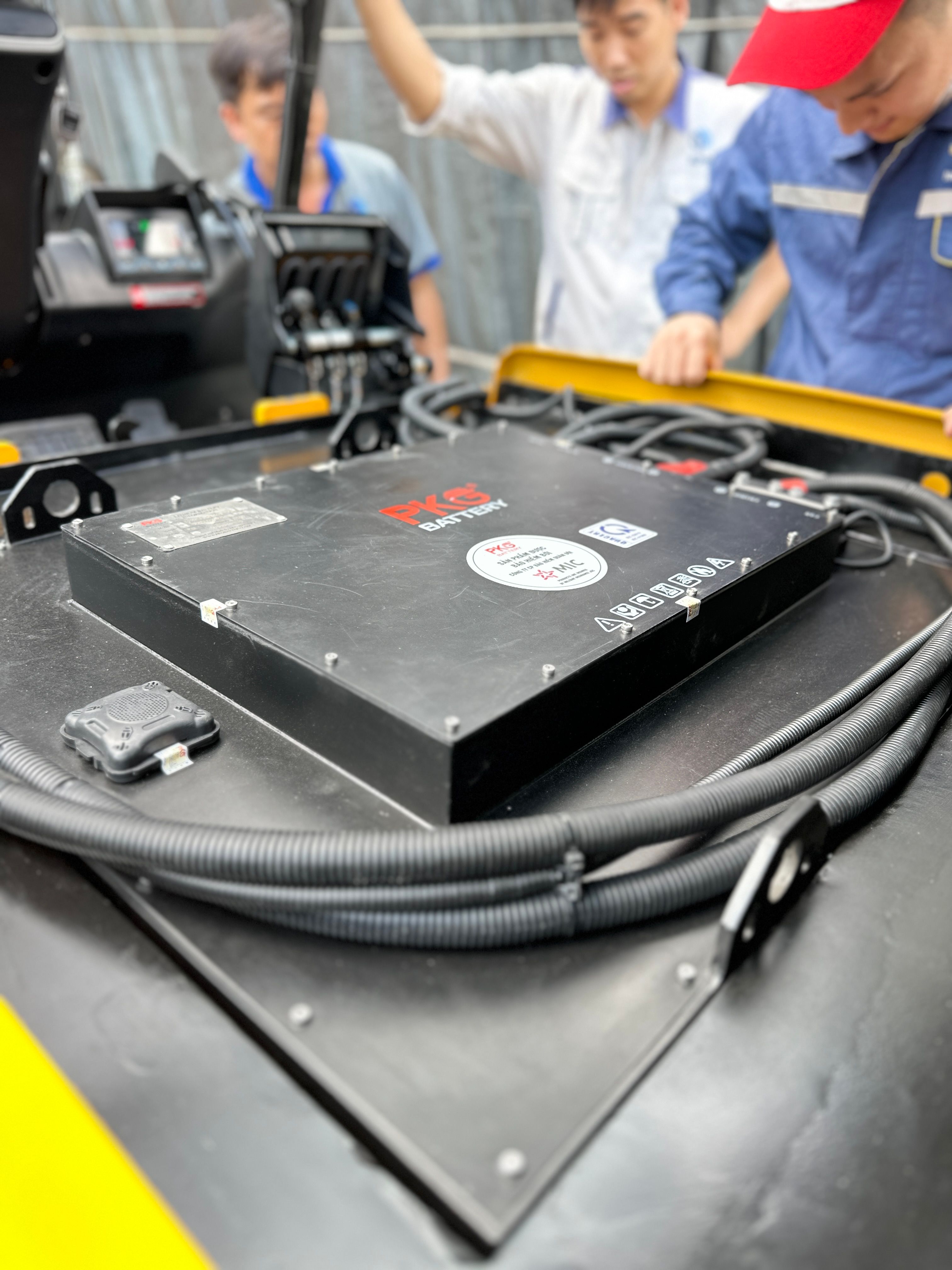
Introduction to Lithium batteries for electric forklifts
Lithium or lithium-ion batteries are modern energy-storage systems featuring high energy density, low self-discharge and exceptional fast-charging capability. Because of this, lithium batteries effectively meet the demanding requirements of businesses that operate forklifts continuously, run multiple shifts and require stable performance.
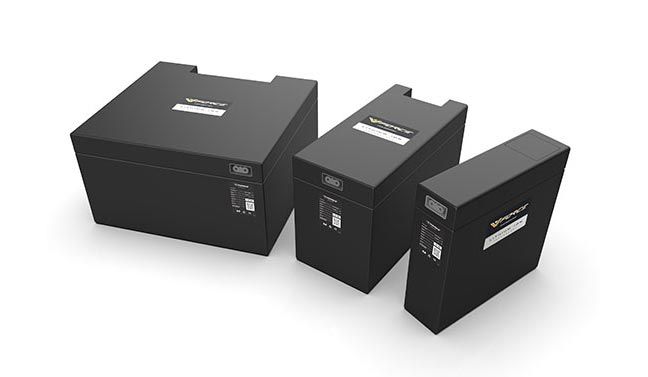
>> Trend of replacing lead-acid batteries with lithium batteries in the forklift industry
Structure and operating principle of lithium batteries for electric forklifts
Main components inside a lithium battery pack
A lithium battery pack for electric forklifts is made up of individual cells. A cell is the basic energy unit where electrochemical reactions occur. A group of cells forms module. A combination of modules, wiring systems, sensors and the BMS, all housed inside a protective metal casing, creates a complete lithium battery pack.
The BMS (Battery Management System) is an intelligent battery-management platform, considered the “brain” of a lithium battery. The BMS monitors, controls, and protects the battery pack.
Operating principle of lithium batteries
The operating principle of a lithium battery is based on the movement of lithium ions between the positive and negative electrodes through the electrolyte.
- Discharge (operation): lithium ions move from the negative electrode to the positive electrode, generating electric current to power the forklift.
- Charging: lithium ions move back from the positive electrode to the negative electrode under the applied charging voltage.
During this process, the BMS balances the cell, ensuring uniform voltage and temperature across all cells, optimizing performance and extending battery life. It also prevents dangerous conditions such as overcharge, deep discharge and overheating, while transmitting battery status data to the user through connected interfaces.
Advantages of lithium batteries for electric forklifts
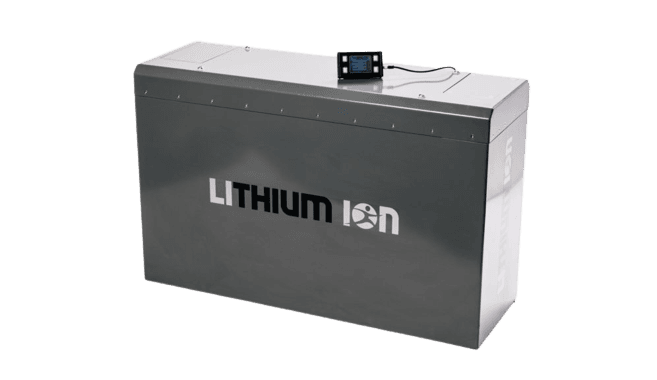
Fast charging, minimizing equipment downtime
The most outstanding advantage of lithium batteries is the ability to fast-charge in just 1–2 hours, providing up to 8 hours of operation, and even allowing opportunity charging during a work shift without affecting battery lifespan.
No scheduled maintenance required like lead-acid batteries
Lithium batteries do not require distilled-water refilling, exhaust-gas cleaning or manual cell equalization, significantly reducing operating costs and maintenance labor.
Service life 2-3 times longer than traditional lead-acid batteries
Typically, lithium batteries offer a lifespan of 3,000-4,000 charging cycles, suitable for businesses operating continuously across 2-3 shifts per day.
Stable performance even at low state of charge
Unlike lead-acid batteries that lose performance when the charge drops below 50 percent, lithium batteries maintain strong lifting and driving power unit nearly depleted.
Enhanced safety thanks to the BMS management system
The BMS provides full monitoring and protection, minimizing risks in forklift environment where heavy-duty, high-power operations occur.
| Lithium battery | Lead-acid battery | |
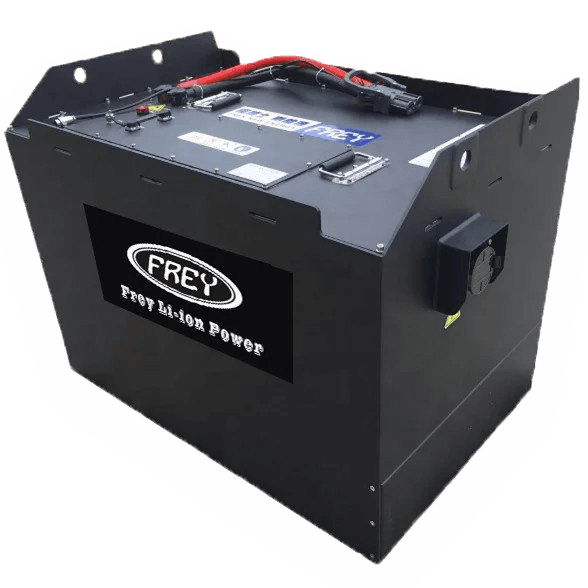 | 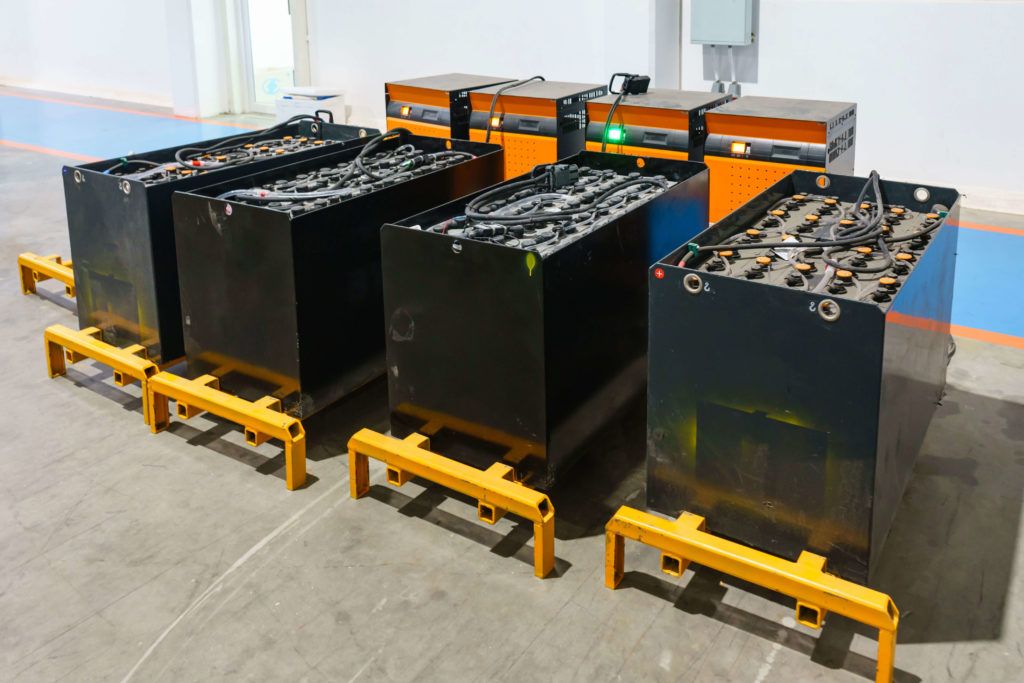 | |
| Charging time | SFast charging 1-2 hours Can be opportunity-charged without affecting battery lifespan | Charging 8–12 hours Opportunity charging is not recommended |
| Maintenance | No watering required, eliminates acid spill and harmful hydrogen gas risks, reduces maintenance cost | Requires distilled-water refilling, cell cleaning, and frequent maintenance |
| Service life | Reaches 3,000-4,000 charge cycles, lifespan up to 8–10 years | Service life around 1,000-1,500 charge/discharge cycles |
| End-of-shift performance | Stable performance until the battery is nearly depleted | Performance drops when battery charge is low |
| Investment cost | Higher initial investment but lower life-cycle cost thanks to long lifespan and minimal maintenance | Lower upfront cost but short lifespan and higher maintenance expenses |
Precautions when using lithium batteries on electric forklifts
To optimize the lifespan and ensure safety when using lithium batteries on electric forklifts, operators must adhere to the following precautions:
Follow safe charging rules, using the dedicated charger provided by the manufacturer and compatible with the battery. Ensure the charging area is well-ventilated and avoid overheating during charging.
Avoid deep discharging the battery to 0% for extended periods.
Do not attempt to repair or modify the battery structure unless you are a professionally trained technician.
Prevent water or chemicals from contacting the battery terminals.
Always monitor the warning display from the BMS (Battery Management System). Stop operation immediately if a fault warning appears and contact the supplier for inspection and repair.
Lithium Battery Prices for Electric Forklifts in Vietnam
Information about Lithium battery prices is a top concern for businesses when deciding to switch technologies. Currently, the market offers a wide range of Lithium batteries for forklifts at different price points, depending on several factors: capacity (Ah), voltage (24V, 48V, 72V), brand, and quality—the latter being the most significant factor affecting Lithium battery prices for forklifts.
Currently, Lithium battery prices vary widely, ranging from approximately 60 million to 500 million VND.
Besides purchasing batteries with a high upfront cost, businesses can also opt to rent Lithium batteries for a short term at a lower cost while still ensuring genuine quality from Nhat Lo Phat 168.
Comparison of the Top 4 Lead-Acid and Lithium Battery Brands on the Market
Contact us to receive a quotation for Lithium batteries.
Should You Upgrade from Lead-Acid Batteries to Lithium Batteries?
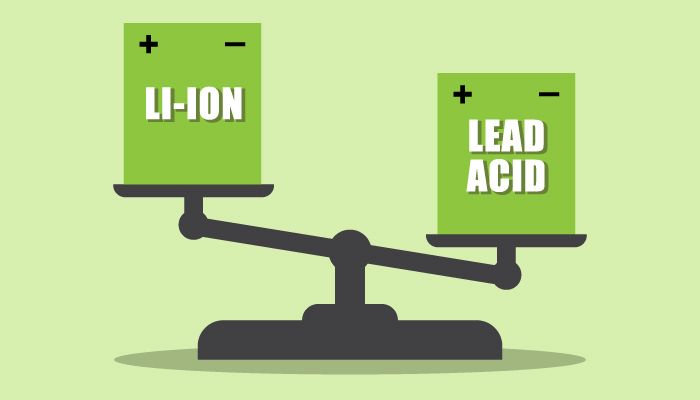
A lead-acid battery set may need to be replaced 2–3 times over 10 years, in addition to electricity costs, maintenance costs, and labor costs for upkeep. In the same 10-year period, you would only need to invest in one high-quality Lithium battery set for your electric forklift.
For example: the initial investment in a Lithium battery may be 150 million VND higher, but it saves the cost of replacing lead-acid batteries twice (around 200 million VND), reduces maintenance costs (50 million VND over 10 years), and increases productivity (additional profit). The total actual cost of a Lithium battery is therefore significantly lower.
The decision to choose between lead-acid and Lithium batteries should be based on a specific analysis of your business operations. The following types of businesses are recommended to use Lithium batteries:
- Businesses with high operational intensity, multiple shifts, or even 24/7 operations.
- Businesses in the food or pharmaceutical industry that must strictly comply with hygiene and food safety standards.
- Businesses aiming to optimize total product lifecycle costs.
- Businesses requiring high performance, heavy loads, and stable power supply.
Frequently Asked Questions About Lithium Batteries for Forklifts
1. Can a Lithium battery be used for all models of electric forklifts?
No. Lithium batteries for electric forklifts must match the correct voltage and capacity for each forklift model. Some older forklift models may require a system upgrade or adapter before installation.
2. Do Lithium batteries degrade or lose capacity over time?
Yes, but the rate is very slow. With modern BMS (Battery Management System) technology, capacity gradually decreases through charge-discharge cycles, typically maintaining 70–80% efficiency after more than 3,000 cycles.
3. Is it safe to charge Lithium batteries overnight on electric forklifts?
Yes, if you use a charger that meets the manufacturer’s specifications. However, businesses should still ensure the charging area is well-ventilated and conduct periodic monitoring to guarantee long-term safety.
4. What is the warranty period for Lithium forklift batteries, and what are the conditions?
Typically around 24 months, depending on the manufacturer. Warranty conditions depend on usage cycles, operating hours, and data recorded by the BMS to ensure the battery has not been misused.
Reference for Operating and Using Lithium Batteries in Warehouses
📞 Hotline: 093 208 1688
Nhat Lo Phat 168 Co., Ltd
- Northern Vietnam: 093 208 1688
- Southern Vietnam: 090 345 1688
- Fanpage: https://www.facebook.com/Nhat-Lo-Phat-168-Leading-Total-Forklift-Solution-Supplier-103205604743397
- Instagram: https://www.instagram.com/nhat_lo_phat_168/
- YouTube: https://www.youtube.com/@nhatlophat1688